Fossil Ammonites, Fish, Orthoceras,
Trilobites and Other Fossils

page 3

Cost

Item Description

Click Picture
for Larger Image

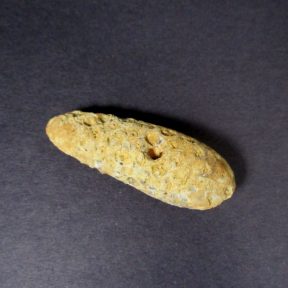
$16.00 FO302c  Here is a very nice specimen of South Dakota Baculite.  The piece measures 3" x 1 1/2" x 3/4" and has not been polished.  This fossil has highly detailed suture marks and nice color.  A great way to begin your fossil collection.

Another photo

This fossil is a member of the Species Baculites compressus which is from the Cretaceous Period some 60 million years ago. It is from the Upper Pierre Shale Formation of Meade County in South Dakota.

south dakota baculite

South Dakota Baculite

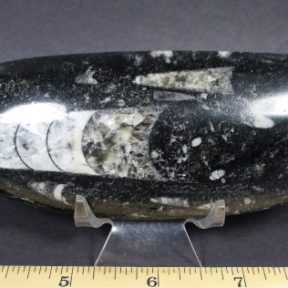
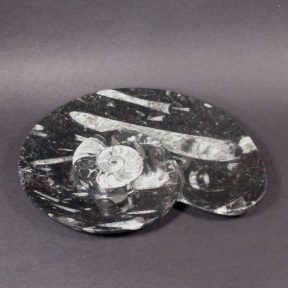
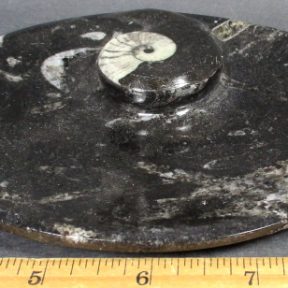
$50.00 FO303b   Here is a very nice, complete larger sized Geisonoceras fossil.  It measures nearly 7 1/4" x 5 1/2" x 1 1/4" and is fully polished except the bottom as shown.  It has intricate detailed suture lines and a good color blend of Gray, Brown and White.  A definite keeper for the fossil collector. 

Another photo

geisonoceras

Geisonoceras


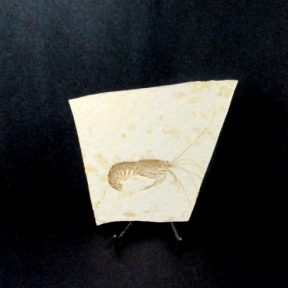
$60.00 FO306c   Here is a good sized, nice quality Fossil Diplomystus Fish from the Eocene Age from the Green River Formation, Lincoln County, Wyoming. This specimen measures over 9 1/4"x almost 7" on the outside of the matrix and is 3/4" thick. The fossil fish itself measures nearly 5 1/4" from head to tail. These fossil fish lived some 50 million years ago and are found in a light colored Limestone. 

  In southwest Wyoming (and parts of Colorado and Utah) in the Green River Formation are found some of the world's most outstanding specimens of fossil fish.  The Green River system was composed of three lakes:  Lake Ulinta, Lake Gosiute and Fossil Lake.  These Eocene Lakes lay in a series of intermountain basins formed by geological events that uplifted the Rocky Mountains during the early Tertiery time.
The Climate was much different from the desert-like climate of this area today.  Both the fauna (crocodiles, alligators, boa constrictors and some subtropical fish families) and the flora (such as large palm trees) indicate a climate much like that found along the Gulf Coast today.  Large amounts of ash found in the sediments indicate that volcanoes were particularly active at this time.
    
The fossils found in the Green River Formation are between 40-60 Million years old and are in excellent preservation.  The most common fish found in the formation is the Knightia, a herring-like fish.  They are found singularly or in large groupings. These groupings are referred to as "Mortality Layers" and are believed to have been caused by extensive ash fall-out after volcanic eruptions. Some of the other species of fish found in the Green River Formation are:  Phareodus, a carnivorous fish often found up to 2 feet in length and having many sharp teeth.  Mioplosus, a true perch, and Priscacara, a sunfish-like fish with stout dorsal and anal spines.  There are also turtles, stingrays, crocodiles and alligator gar-fish.
The  fossils of the Green River Formation - each one unique - are some of nature's finest art. They are highly valued by collectors the world over.

fossil fish

Fossil Fish

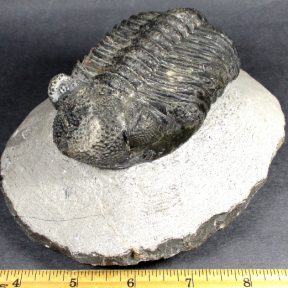
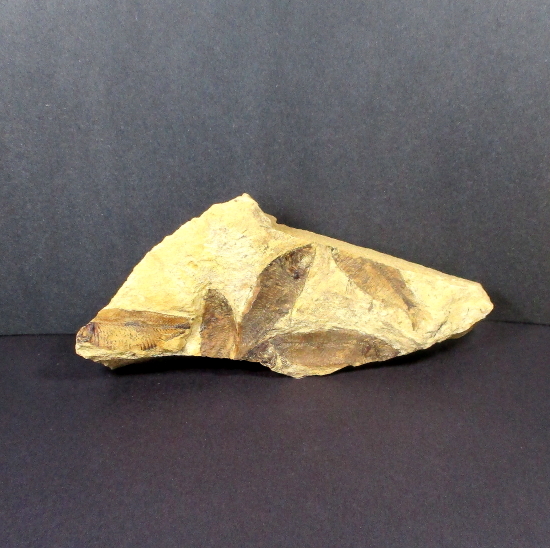
$24.00 FO304c  This is a fossilized Trilobite in matrix from Morocco.   The specimen measures 2 5/8" x 1 5/8" x nearly 3/4" in matrix that is 3 1/4" x over 2 3/4" x 2".  Sections of this fossil have been glued back together but it does not detract from it's display. A very cool fossil for you to enjoy.

Another photo

Another photo

trilobite

Trilobite

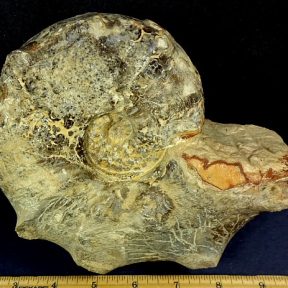
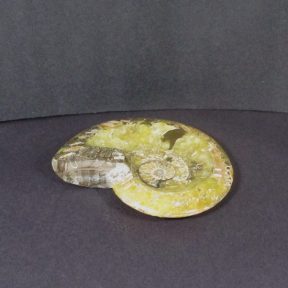
$115.00 FO305c  This is a complete fossilized Ammonite from Madagascar.  The exterior has been ground smooth and polished to show the suture lines. The Ammonite is a pretty brown color with the detailed tan suture lines The specimen measures 6 3/8" x 5 3/8" x over 1 1/2".  An excellent, above average quality item to display in your collection!

Another photo

Ammonites are extinct members of the cephalopod group of mollusks. Only a limited number of species have survived to the present day which includes the squid and the chambered nautilus. Ammonites had a multi-chambered shell, and added more chambers as it grew, always living in the outer chamber.  They lived in the Cretaceous period some 63 to 130 million years ago.

ammonite

Ammonite

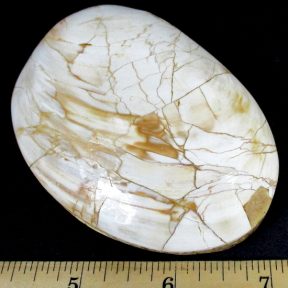
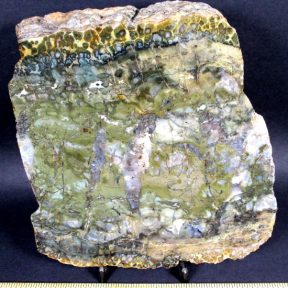
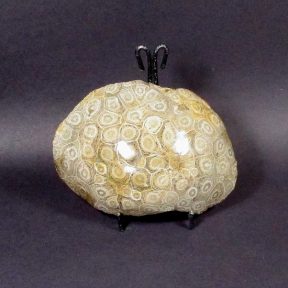
$35.00 FO313b   Here is something different for the Fossil collector.  This is a nice piece of fossilized Coprolite, also known as "Dino Dung".  It measures 6 1/8" x 5 1/8" x 1/2" and has been polished on the front side.  This specimen has a nice blend of color and a good design that resembles Petrified Wood.  Take it home with you today.

Another photo

coprolite

Coprolite

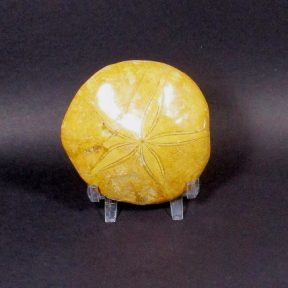
$20.00 FO300c  This is a neat find!!  Here is a Nice Quality larger fossilized Sand Dollar from Madagascar.  It measures over 3" in diameter x 1" and has been nicely polished on the top surface to bring out the detail allowing for a great display. 

Another photo

This species of sand dollar is "Clypeasteroida" They are very beautiful specimens and have nice detail.  They are from Majanga, Madagascar and lived in the Jurassic period some 146 to 200 million years ago.

sand dollar

Fossil Sand Dollar

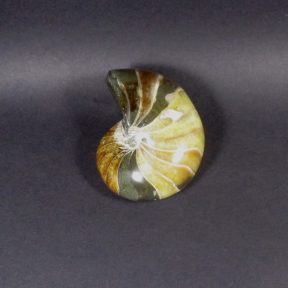
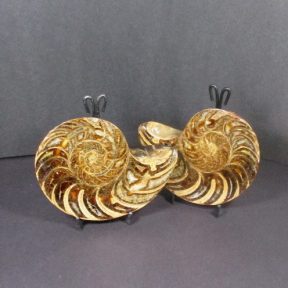
$30.00 FO310c  This is very set of polished fossilized Nautiloid halves from Madagascar.  Each side of the specimen measures nearly 2 1/2"  x 1 7/8" x 3/4". The fossil has good detail and color.  A great educational tool or very cool keepsake.

Another photo

Ammonites are extinct members of the cephalopod group of mollusks. Only a limited number of species have survived to the present day which includes the squid and the chambered nautilus. Ammonites had a multi-chambered shell, and added more chambers as it grew, always living in the outer chamber.  They lived in the Cretaceous period some 63 to 130 million years ago.

nautiloid

Nautiloid

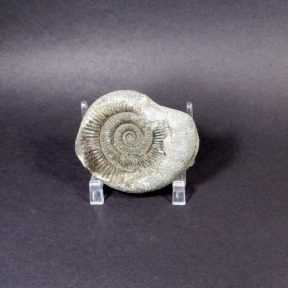
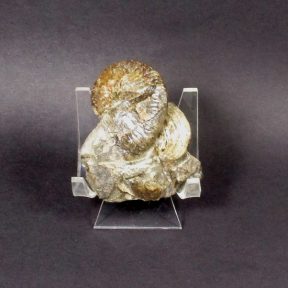
$175.00 FO308b  This is a  fossilized Ammonite collage from the Jurassic (Mesozoic era) period about 172 million years ago.  This is species Dactylioceras in country rock from Schlaifhausen, Germany.  The specimen has many Ammonites in various sizes scattered throughout measuring from 1/2" to over 1 1/2" and the matrix measures over 5 1/2" x 4" x 1 1/4". Very cool!

Another photo

Another photo

ammonites

Ammonites

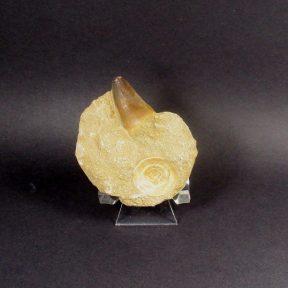
$7.50 FO312b  Here is a fossilized Echinoid from Morocco.  The picture at the right is representative of the Echinoid you will receive.  These specimens vary in size from 1 3/4" to nearly 2 1/4" in diameter and 7/8" to 1 1/8" thick. 

Another photo

You will receive one (1) Echinoid. Unfortunately, we are unable to give a choice to specimens but we do promise a good selection.

echinoid

Echinoid

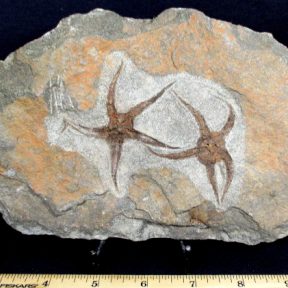
$17.00 FO311c   This is a Fossil Fish Knightia from the Eocene Age from the Green River Formation, Lincoln County, Wyoming.  This fossil fish specimen is in limestone matrix measuring nearly 7" x almost 6"x over 1/4".   The fossil itself measures 3 1/2" from head to tail.  This fossil fish lived some 50 million years ago.  These fish are found in a light colored Limestone.

  In southwest Wyoming (and parts of Colorado and Utah) in the Green River Formation are found some of the world's most outstanding specimens of fossil fish.  The Green River system was composed of three lakes:  Lake Ulinta, Lake Gosiute and Fossil Lake.  These Eocene Lakes lay in a series of intermountain basins formed by geological events that uplifted the Rocky Mountains during the early Tertiery time.
The Climate was much different from the desert-like climate of this area today.  Both the fauna (crocodiles, alligators, boa constrictors and some subtropical fish families) and the flora (such as large palm trees) indicate a climate much like that found along the Gulf Coast today.  Large amounts of ash found in the sediments indicate that volcanoes were particularly active at this time.
    
The fossils found in the Green River Formation are between 40-60 Million years old and are in excellent preservation.  The most common fish found in the formation is the Knightia, a herring-like fish.  They are found singularly or in large groupings. These groupings are referred to as "Mortality Layers" and are believed to have been caused by extensive ash fall-out after volcanic eruptions. Some of the other species of fish found in the Green River Formation are:  Phareodus, a carnivorous fish often found up to 2 feet in length and having many sharp teeth.  Mioplosus, a true perch, and Priscacara, a sunfish-like fish with stout dorsal and anal spines.  There are also turtles, stingrays, crocodiles and alligator gar-fish.
The  fossils of the Green River Formation - each one unique - are some of nature's finest art. They are highly valued by collectors the world over.

knightia fossil fish

Knightia Fish

$110.00 FO314c   Here is a very cool fossilized Nautiloid from Madagascar.  This particular large fossil measures nearly 4 3/4" x 3 3/4" x 3 1/8" and has been polished on all sides.  The fossil is complete and has good detail and color.  A great educational tool or very cool keepsake.

Another photo

Another photo

Ammonites are extinct members of the cephalopod group of mollusks. Only a limited number of species have survived to the present day which includes the squid and the chambered nautilus. Ammonites had a multi-chambered shell, and added more chambers as it grew, always living in the outer chamber.  They lived in the Cretaceous period some 63 to 130 million years ago.

nautiloid

Nautiloid

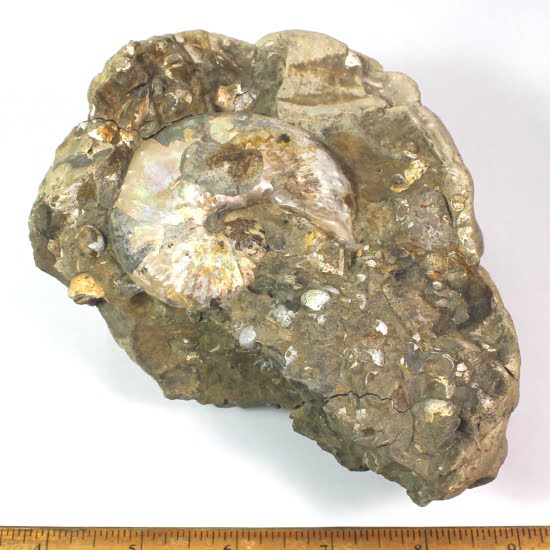
$100.00 FO301b  This is a very nice, high quality Schafite in matrix.  This fossil is from South Dakota.  It measures 2 1/4" x 2" in a fossilized matrix measuring 8 1/2" x 5" x 4".  The Schafite has a natural, iridescent, pearl-like finish.  These fossils make great gifts or work wonderful as an educational tool for school, scouts or clubs.  Close observation will reveal several other partial to semi-complete fossils throughout the matrix.

Another photo

Another photo

Ammonites are extinct members of the cephalopod group of mollusks. Only a limited number of species have survived to the present day which includes the squid and the chambered nautilus. Ammonites had a multi-chambered shell, and added more chambers as it grew, always living in the outer chamber.  They lived in the Cretaceous period some 63 to 130 million years ago.

schafite

Schafite

$100.00

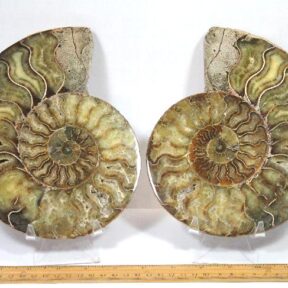
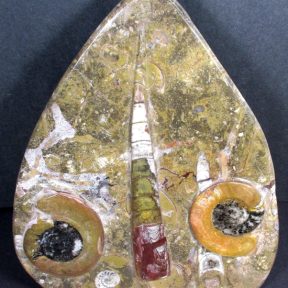
FO309c   Here is a very nicely polished beautiful Ammonite set from Madagascar.   This Ammonite has been polished to show the inner beauty.  The sections each measure nearly 5 1/2" x 4 5/8" x 5/8" and have a nice polish on both sides. The Ammonite has a deep Brown crystallized center of Calcite and Aragonite.

Another photo

Another photo

Another photo

Ammonites are extinct members of the cephalopod group of mollusks. Only a limited number of species have survived to the present day which includes the squid and the chambered nautilus. Ammonites had a multi-chambered shell, and added more chambers as it grew, always living in the outer chamber.  They lived in the Cretaceous period some 63 to 130 million years ago.

ammonite

Ammonite

I'm on Page 3
Go To Page:
[ 1 ] [ 2 ]  [ 4 ]  [ 5 ]  [ 6 ]  [ 7 ]  [ 8 ]


Ordering information and instructions

Click on the link below if  you would like to get an idea of shipping cost on your package
Shipping Calculators

The Rock Shed
515 1st Street
Keystone, SD  57751

Hours: Monday - Saturday 9:00 AM to 6:00 PM
Sunday 1:00 to 6:00 PM
 Toll Free Order Line:  1-866-354-0894
 Information:  605-666-4813
email:  info@therockshed.com

Home
 Long Gemstone Beads I Short Beads I Amber & Necklaces I Bracelets I Earrings I Sterling Pendants
Rosaries I Fossils I Copal I Polished Rock
I Educational Kits I Bookends I Gold Specimens
Hearts I Septarians I Spheres I Eggs I Minerals I Gemstone lights I Books I Plastic Stands I Brass Stands
Rock Tumbler Page I Grit and Accessories I Tumbling  Rock I Rough Rock I Landscape Rock
Lapidary Grinders I Lapidary Saws I Diamond Blades I Agates I Clearance
Shipping Information I History I Auctions
I Pictures I Links