|
Page 5
|
Cost
|
Item
Description
|
Click Picture
for Larger Image
|
|

|
$45.00 |
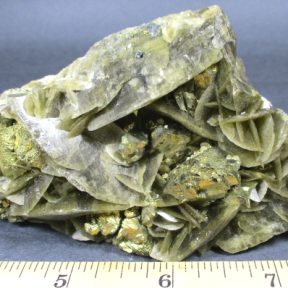
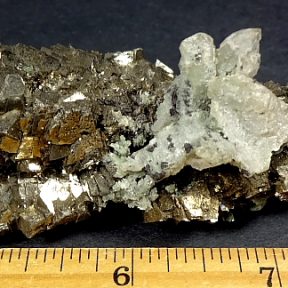
M516c Here is
a very different, very beautiful light Peach and White combination mineral.
It measures 6 1/4" x 7 1/4" x 1 1/2" and has an interesting multi-textured
appearance. This mineral grouping has White Stilbite sheaves, super
cool clear Fluorapophyllite cubical Crystals resting in a Peach colored nubby
base covered by tiny White spheres. Just amazing. Stilbite
is another Silicate mineral from the Zeolite family. It is often characterized
by its sheaf like aggregates. The color is usually white and when the
cleavage is perfect, will have a distinct pearly luster.
Apophyllite, also a Zeolite, is Silicate mineral with very well
defined clear Crystals and is very popular as a collector's mineral.
The Crystal structure will refract like in obvious rainbows and can form "natural
pyramids" when tumbled.
|
Fluorapophyllite-Stilbite
|
|

|
$20.00 |
M500c This is
a two colored, very different Aragonite Crystal cluster. It measures
3 1/4" x 2 1/4" x 2" and has a natural textured appearance. This specimen
has a sparkly Clear to White color on one side and a dusted, Rusty Brown color
on the other. The Brown color is due to Iron collecting on the Crystal
as it formed in the water. A very neat addition to your mineral collection.
Another photo.
Aragonite is a Carbonate mineral that can occur in conjunction with
Calcium Carbonates. Aragonite differs from Calcite in the formation
of the Crystal shapes which can be in lattice, crystal, columnar or fibrous
in many different designs, shapes and sizes. Aragonite will form in
mollusk shells, oceans and salt water caves as inorganic precipitates called
marine cements and speleotherms. Ammolite is a form of Aragonite with
impurities that make it iridescent and valuable as a gemstone.
|
Aragonite
|
|

|
$32.00 |
M515c
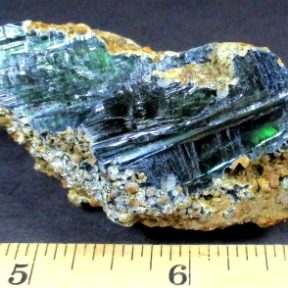
This is a larger, beautiful piece of Blue Kyanite from Brazil. This is a nice
specimen measuring 4 1/2" x 2 1/2" x 1 1/2" and has a very pretty shaded Blue
color. This specimen has White Quartz embedded in the Blue Kyanite giving
the appearance an extra sparkle and shine.
Another photo.
Kyanite is a typically blue Silicate mineral that is commonly found
in Aluminum rich metamorphic pegmatites and/or sedimentary rock. It
is used primarily in refractory and ceramic products including porcelain plumbing
fixtures and dinnerware. It is also used in electrical insulators and
abrasives. It is definitely a collector's mineral.
|
Kyanite-Quartz
|
|

|
$24.00 |
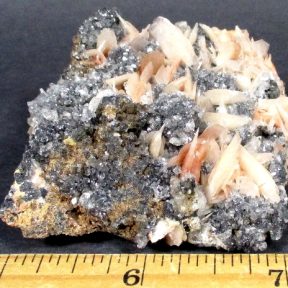
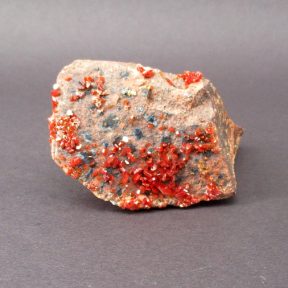
M512b Here is
a very nice, larger piece of Rhodocrosite with several Calcite Crystals mixed
with Galena on a Limestone bed with an extra bonus of very tiny, very sparkly
Pyrite Crystals on the bottom of the specimen. It measures 3 5/8" x
3" x 1 3/4" and has a nice peach, sparkly appearance. This mineral is
from Santa Rita Mine in Peru. Rhodocrosite is a Manganese Carbonate
mineral. In its rare, pure form, it is typically a rose-red color but
impure specimens can be shades of pink to pale brown with pink as the most
common color. Rhodocrosite is often associated with Calcium, Zinc and
Magnesium. Its main use is as an Ore of Manganese which is a key component
of stainless steel and certain aluminum alloys. It is relatively soft
in formation and is very difficult to cut and therefore is rarely found faceted
in jewelry.
|
Rhodocrosite-Calcite-Galena-Pyrite
|
|

|
$44.00 |
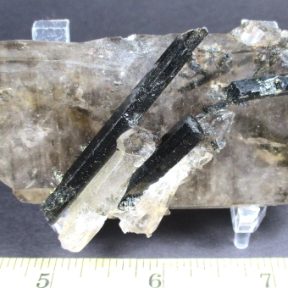
M510b Here
is something very different for the mineral collector. This is a nice
piece of Tetrahedrite from Pachapaqui Ancash in Peru. This specimen
measures 2 1/8" x 1 1/4" x 3/4" with several smaller crystal areas.
A really neat addition to any mineral collection. Tetrahedrite is
a rare Copper antimony sulfide mineral. It is closely related to Tennantite
and other elements, most notably Iron and Zinc along with less common Silver,
Mercury and Lead. It gets its name from the distinctive tetrahedron
shaped cubic Crystals and usually occurs in massive form. The color
is steel grey to a metallic black.
|
Tetrahedrite
|
|

|
$9.00 |
M513b
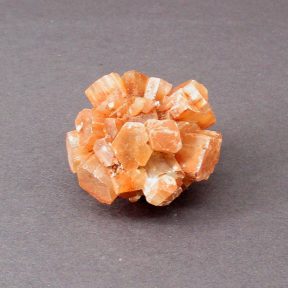
This is a set of 5 very nice, hand selected Aragonite
Crystals from Morocco. Each Crystal measures approximately 1+"
and have many radiating barrel shaped Crystals protruding from them.
Each Crystal has own unique shape and color. A very nice gift or educational
tool. Items will be similar to like item. Aragonite is a Carbonate
mineral that can occur in conjunction with Calcium Carbonates. Aragonite
differs from Calcite in the formation of the Crystal shapes which can be in
lattice, crystal, columnar or fibrous in many different designs, shapes and
sizes. Aragonite will form in mollusk shells, oceans and salt water
caves as inorganic precipitates called marine cements and speleotherms.
Ammolite is a form of Aragonite with impurities that make it iridescent and
valuable as a gemstone.
|
Aragonite Crystals
|
|

|
$23.00 |
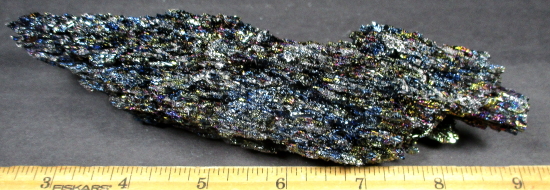
M505b
Here is an interesting find. This is a very nice specimen
of Stibnite from China. It measures 1 3/4" x 2 1/4" x 1" and has a sparkly
Grey metallic color and an unique "spiky" appearance.
Stibnite, also known as Antimonite, is a Sulfide mineral that forms grey
Crystals. It is the most important source for the rare Metalloid Antimony.
It is used in the manufacture of fireworks, batteries, safety matches and
mascara.
|
Stibnite
|
|

|
$9.00 |
M504c
Here is a very interesting mineral
specimen of Golden Calcite from Nasik, India. It measures 3 18" x 1
1/2" x 3/4" and has a sparkly, very shiny light Yellow appearance.
Calcite is a Carbonate mineral that is most widely distributed on the Earth's
surface. It is a common constituent of sedimentary rocks with Limestone
in particular. A Calcite formation can take on many different shapes
and sizes which is dependent on the location, ground water occurrence and
temperature. Calcite is usually white or colorless but can be gray,
red, yellow, green, blue, violet, brown or black. The deeper the color
is usually indicative of the definitive impurities from the earth or water.
|
Calcite
|
|

|
$30.00 |
M506c
Here is a very nice specimen of Purple
Fluorite from Cave in the Park, Illinois. This a nice quality mineral
measuring 2" x 1 3/4" x 1 1/2" and has a rough, natural texture with sparkly
iridescence. The mineral has a deep Purple color with an interesting
vein of Gold Pyrite running through the middle of the specimen.
Fluorite, also referred to as fluor-spar, is a mineral composed of Calcium
Fluoride. It is a widely occurring mineral found world wide and is often
found with metallic minerals such as Galena, Sphalerite, Barite, Quartz and
Calcite. Fluorite may fluoresce strongly in ultraviolet light which
may be due to the presence of some impurities such as Yttrium. Blue
is the most common color but red, purple, green, yellow and white are also
frequent. It can be used in high performance telescopes, camera lens,
enamels and in the making of opalescent glass.
|
Fluorite
|
|

|
$18.00 |
M502c
Here is a very interesting specimen
of Sulfur. It measures 4" x 2 1/2" x 1 1/2" and has not been polished.
This mineral has a pretty Yellow and White color and a nice sparkly appearance.
Sulfur, also known as Sulphur, is an abundant, multivalent non-metal mineral.
In its native form, it is a yellow Crystalline solid. In nature, it
can be found as the pure element in sulfide and/or sulfate minerals.
It is an essential element for life. The primary uses are in the manufacture
of fertilizers, gun powder, matches, insecticides and fungicides.
|
Sulfur
|
|

|
$60.00 |
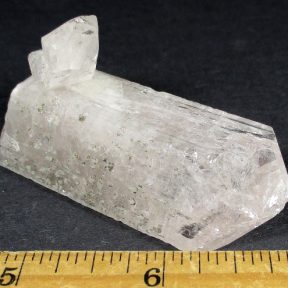
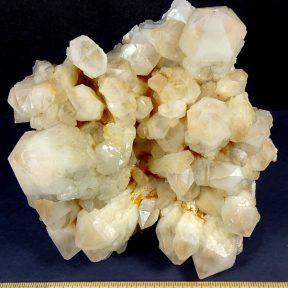
M501b Here is
something different for the mineral collector. This is a very nice,
above average quality Crystal Quartz cluster. It measures 5" x 4" x
2 1/4" and has several larger Crystal points with very nice facets and a pretty
formation. Close observation will reveal one large double terminated
Crystal near the side of the Crystal. This cluster also has several
very unique, full Crystals with some in a tabular state. A very nice
Crystal cluster to add to your collection. Quartz is the second most
common mineral in the Earth's continental crust. It is mainly composed
of Silica or Silica based minerals. Although Quartz is known by a variety
of names, the most important distinction between types of Quartz is that of
macro-crystalline, individual crystals visible to the unaided eye, and micro-crystalline,
where aggregates of crystals are only visible under high magnification.
There are many forms of Quartz including Chalcedony, Amethyst, Citrine, and
Carnelian which are results of mineral impurities or heat treatments. Crystals
form when they undergo a process of solidification. The end result may
be a single Crystal, but generally many Crystals form simultaneously which
leads to a polycrystalline solid.
|
Quartz Crystal Cluster
|
|

|
$18.00 |
M507b
This is
a very different specimen of Azurite Crystals in a Calcite matrix. The
mineral is from the Sidi Ayade Mine in Midlet, Morocco. It measures
3" x 1 1/22" x 1 1/2" and has a rough texture. This mineral mix has
several areas of the very pretty Blue Azurite that sparkle in good light.
Azurite is a deep blue Copper mineral produced by the weathering of Copper
Ore deposits. The color is exceptionally clear and deep. Azurite
specimens are typically massive to nodular and are often stalactitic in form.
The color tends to lighten over time due to the weathering of the specimen
surface into Malachite.
|
Azurite
|
|

|
$28.00 |
M508c This is
an interesting piece of light Gold Calcite covered with a sprinkling of shiny,
sparkly Pyrite. It measures 2 3/4" x 2 3/8" x 2 1/4" with a very nice
cubical appearance. This material is from Morocco.
Another photo.
Calcite is a Carbonate mineral that is most widely distributed on the Earth's
surface. It is a common constituent of sedimentary rocks with Limestone
in particular. A Calcite formation can take on many different shapes
and sizes which is dependent on the location, ground water occurrence and
temperature. Calcite is usually white or colorless but can be gray,
red, yellow, green, blue, violet, brown or black. The deeper the color
is usually indicative of the definitive impurities from the earth or water.
|
Calcite-Pyrite
|
|

|
$120.00 |
M509b
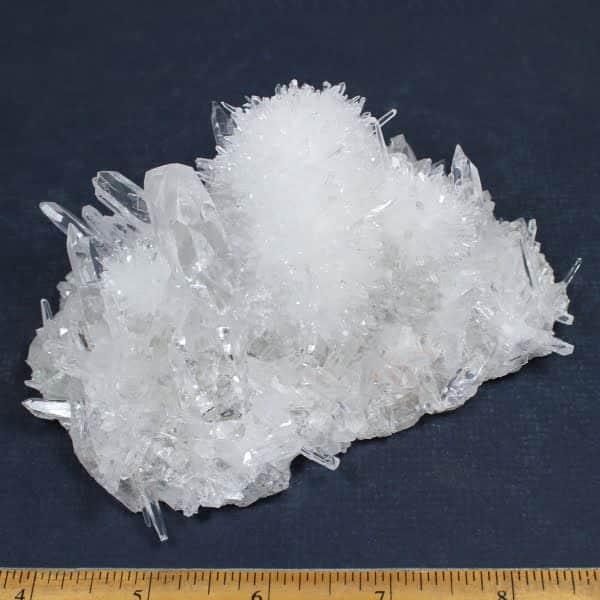
Here is a very, large specimen of a
Quartz Crystal cluster from China. It measures 7 1/4" x 6 3/4" x 2 1/2"
and has a natural shine. This specimen has a natural Citrine color and
rests on a wooden base. This very beautiful Crystal cluster has a floral-like
patterns with numerous, various sized Crystals with many complete points,
but close observation will reveal some breakage with some of the smaller Crystals.
Another photo
Another photo.
Quartz is the second most common mineral in the Earth's continental
crust. It is mainly composed of Silica or Silica based minerals.
Although Quartz is known by a variety of names, the most important distinction
between types of Quartz is that of macro-crystalline, individual crystals
visible to the unaided eye, and micro-crystalline, where aggregates of crystals
are only visible under high magnification. There are many forms of Quartz
including Chalcedony, Amethyst, Citrine, and Carnelian which are results of
mineral impurities or heat treatments. Crystals form when they undergo a process
of solidification. The end result may be a single Crystal, but generally
many Crystals form simultaneously which leads to a polycrystalline solid.
|
Quartz Crystal
|
 |
$45.00 |
M514b
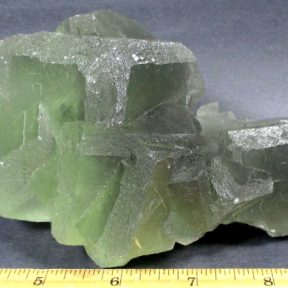
Here is a larger, above average quality Green
Calcite specimen. It measures 8 1/4" x 5 3/4" x 4" and has a natural
shiny finish. This piece of Calcite has a shaded Green color and an
unusual shape. It would make a great conversation piece or garden rock.
Another photo.
Calcite is the Carbonate mineral that is most widely distributed on the Earth's
surface. It is a common constituent of sedimentary rocks with Limestone
in particular. A Calcite formation can take on many different shapes
and sizes which is dependent on the location, ground water occurrence and
temperature. Calcite is usually white or colorless but can be gray,
red, yellow, green, blue, violet, brown or black. The deeper the color
is usually indicative of the definitive impurities from the earth or water.
|
Calcite
|
|

|
$35.00 |
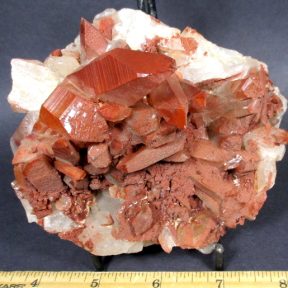
M503c Here is a very
nice Orange-Red Dog Tooth Calcite Crystal from Mexico. It measures 3
1/2" x 2 1/2" x 2" and has a naturally smooth exterior. This specimen
has an almost translucent Crystal points with dark Red pyramid-shaped centers
and an iridescent shine. A super gift.
Calcite is the Carbonate mineral that is most widely distributed on the
Earth's surface. It is a common constituent of sedimentary rocks with
Limestone in particular. A Calcite formation can take on many different
shapes and sizes which is dependent on the location, ground water occurrence
and temperature. Calcite is usually white or colorless but can be gray,
red, yellow, green, blue, violet, brown or black. The deeper the color
is usually indicative of the definitive impurities from the earth or water.
|
Dog Tooth Calcite
|
|

|
$20.00 |
M511b
Here is a very nice, but different mineral for the mineral collector.
This is a mixed mineral specimen of Conichalcite and Limonite that measures
2 1/4" x 2" x 1 1/4"and has a bright Green color. The Conichalcite rests
in a bed of Rusty Limonite and has several White to Clear Calcite Crystals
resting in the mineral.
Conichalcite is known for a sparkling green color that is hard to
mistake for any other mineral. It is often encrusted onto Limonite
producing a very colorful specimen. It is associated with Limonite,
Malachite, Adamite, Olivenite and Smithsonite.
Limonite is an ore consisting of a mixture of hydrated Iron Oxide-Hydroxide
of varying composition of minerals such as Goethite, Lepidocrocite, or Jarosite.
It has been mined with Hematite as an Ore for the production of Iron. Limonite
is heavy and has a yellow-brown color. It is often used as the pigment
ochre in many paints.
|
Conichalcite-Limonite
|
|

|
$58.00 |
MIN59c
Here is a very nice, larger piece of Copper with Calcite specimen from
the Blue Ridge Summit in Pennsylvania. This piece measures 8 1/2"
x 5" x 1 1/4". This is a unique mineral that would enhance any collection.
Copper is a reddish colored metal with a high electrical and thermal
conductivity. It has its characteristic color because it reflects red
and orange light and absorbs other frequencies in the visible spectrum due
to its band structure. It is in the same family as Silver and Gold and
is a malleable metal. It is beautiful natural or polished.
|
Copper-Calcite
|